How to build your email list, and why it matters for your next event

Social media sites like Instagram, Twitter, and LinkedIn can be great for finding new people who might want to come to your community event. But these sites sit between you and your followers, deciding what they should see. And they limit how many people you can reach at one time in the hopes you'll pay to boost your post.
These sites are essentially attention machines. Their value to us as organisers is to help us find new people who might like what we have to offer.
Other ways of getting people's attention might be by
- appearing on others' podcasts
- posting to (not spamming) forums or Reddit threads
- getting a shout-out in an email newsletter
But once you've grabbed someone's attention, even if they hit Follow, there's no guarantee they'll see when your next event is or how to get tickets. For that, we need a retention machine.
That's where email comes in
Email is technology as old as dirt, and is almost as basic:
- You tell your email provider (Gmail, Hotmail, whatever) to contact Jo.
- Your provider sends your message to Jo's provider, who then hands the message to Jo.
As long as you have Jo's email address and their ongoing consent, you can always contact them.
It doesn't matter how many Instagram followers you have or how many thousands of views are on your latest TikTok. If you don't have a direct means of contacting someone who's interested in your stuff, you don't have a relationship.
How to send emails en masse
First things first – and this is important – Gmail, Hotmail, Outlook etc are not for sending emails in bulk. Sending an email to yourself and then BCCing a bunch of addresses is how you get labelled a spammer.
What you need is an email service provider (ESP). You've probably already heard of MailChimp, but it's quite bloated and cumbersome of late.
Rather than give you an exhaustive list of options (you can Google them for yourself), I'll recommend MailerLite. It's what I use every week and I'm not affiliated with them. I just think they do a good job, they have generous pricing (including a good free plan), and helpful customer support.
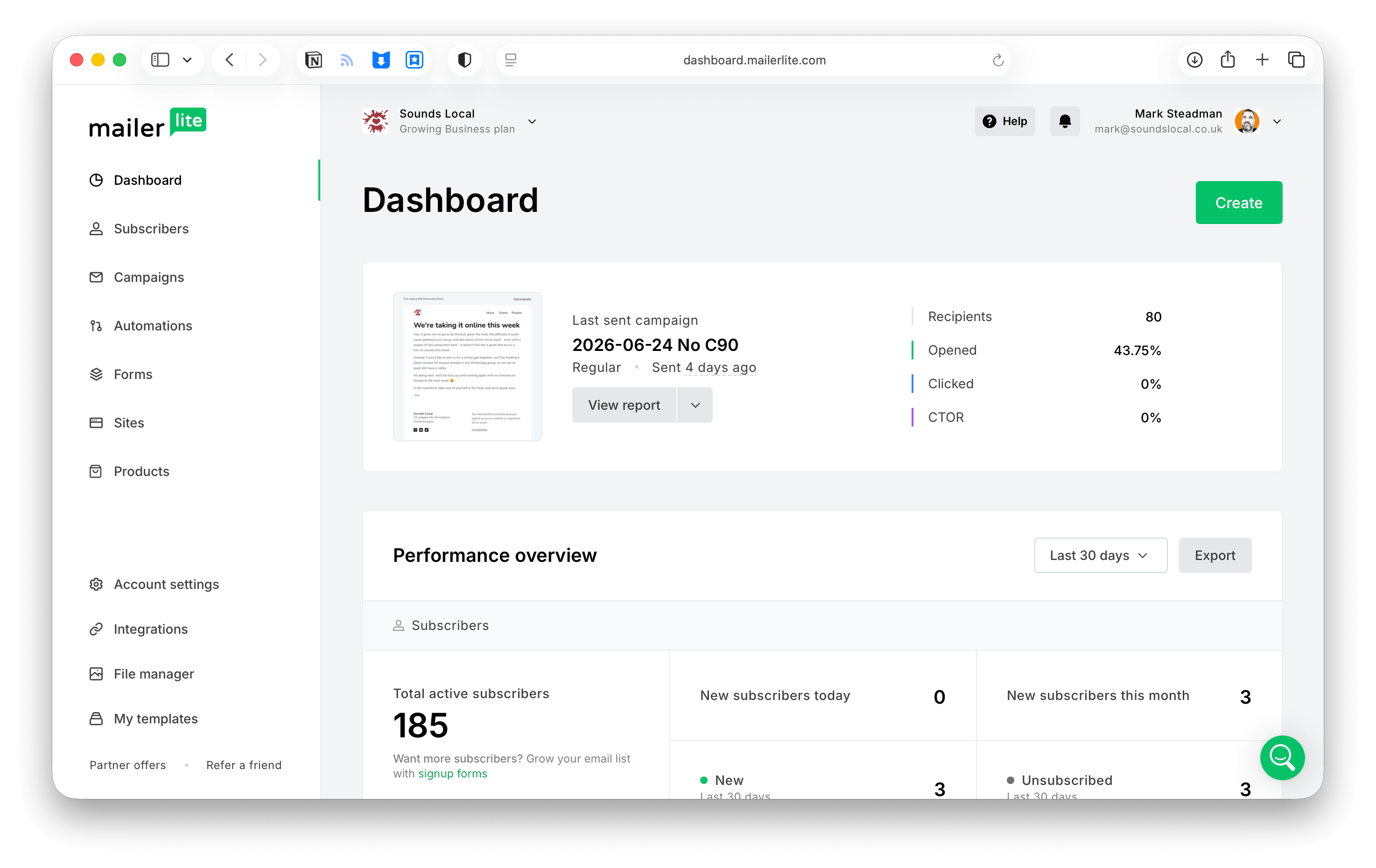
You can write plain-text emails for that super personal touch, or use one of their drag-and-drop templates for a bit more marketing pizazz.
Sign up with an ESP and get a domain name
As a reminder, an ESP is the service you'll use to send emails in bulk. A domain name is the bit that comes after the @ symbol in your email address.
If you're sending emails in bulk, you might breach your current email provider's terms of service by using your Gmail or Hotmail address. You can buy a .co.uk domain from lots of different sellers, then hook it up to your ESP by following their instructions. (Again, you can Google around and find a domain seller you like.)
I know this is all sounding a bit technical, but not to worry. I'm here if you need a hand getting stuff set up.
What to use email for
Depending on what you're running, email will serve as
- a reminder of your next event
- a thank-you for attending
- a request for follow-up
- some crucial stuff your attendees need to know before leaving the house
A lot of us can worry about bothering people with too many emails. If you're worried about it, you're probably not sending enough. That doesn't mean you should bombard people, but you can probably stand to communicate a little more... especially as delivery of an email is still no guarantee the recipient will read it.
Building your list
I mention this because it's important to know why you're building your list. Sure, maybe 90% of it is about shifting as many tickets as possible. But the other 10% might be to
- show what you're up to
- ask for financial support
- remind someone who hasn't been in a while that the thing they like is still happening
So, where do you start building your list? Let's do it from scratch, as I did in 2025 when I started C90 Community Chorus.
Work with your venue
If you're putting something on in a friendly place that has a newsletter, make sure they include your event in their next issue – preferably the next 2 or 3. And make sure they include a link to get tickets!
Plenty of places will offer to do this, but not all. So check out your venue's website first to make sure they have a newsletter, then ask to be included.
You can also tag the venue in your own social media posts, or ask to collaborate with the venue on a post. If it's a place that sells food and drink, it's in their interest to make sure more people turn up!
Boost a post
And speaking of social media, if you can, throw £100 at an Instagram post you're proud of. Show it to a few people first to make sure they like it and it has all the necessary info.
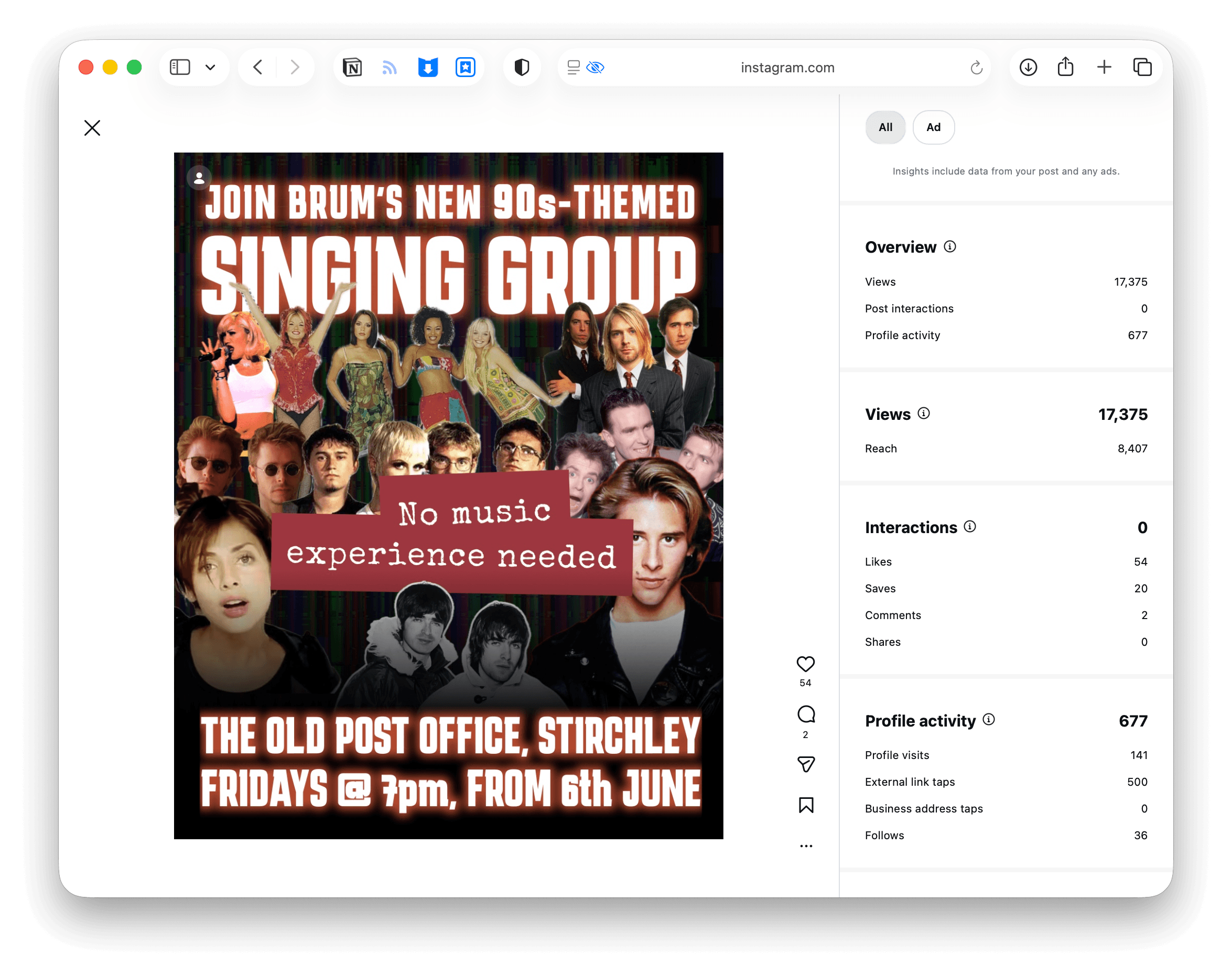
Create a targeted, local audience based on venue location, age, and interest. You don't need huge numbers of views or clicks, but enough to express an interest and maybe share the post organically.
Put all the right metadata in place like alt tags so visually impaired viewers don't have to squint to read small text. Increasingly, fully-sighted people are reluctant to repost images without alt tags because they're not accessible, so it'll likely improve your reach.
I'd only recommend boosting a post if you plan on charging, even voluntarily for your event. (As a side note, it's a good idea to ask for a contribution to pay for things like this, not as a way for you to get rich!)
Go analogue
I made up a bunch of flyers for my first C90 event back in June 2025. I gave some out to friends and family to distribute, and I walked a few streets in my local area, putting them through letterboxes.
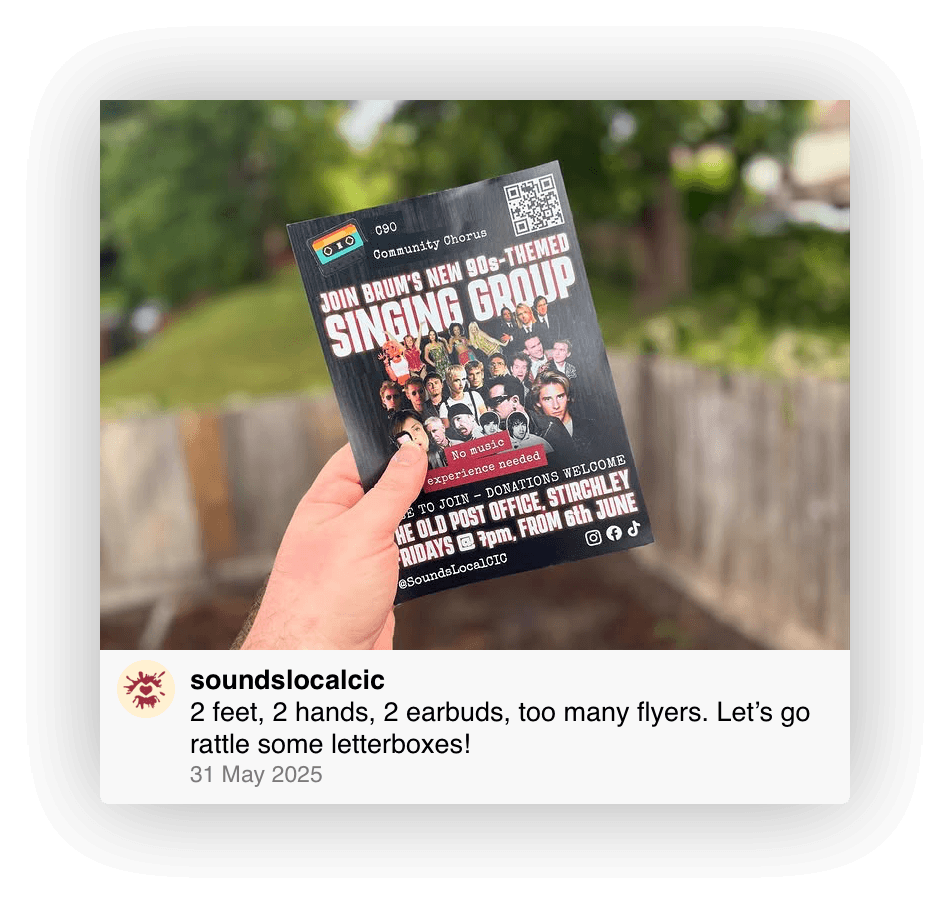
The return on investment here is low, but it's not 0. And the objective with a flyer is not to get someone's email address directly. It's to point them to a page (via QR code or easy-to-type address) where they can sign up for your event, via Eventbrite or similar.
Coffee shops, community centres, coworking spaces and libraries often have noticeboards people can pin flyers to. Make yours stand out, and crucially make it easy to act on, and you might be surprised how many new people you pick up.
Connect your ticketing site to your ESP
This is probably the most important. For free events, getting a ticket through somewhere like Eventbrite is not much more than an expression of intent. I ask for a voluntary contribution of £5 at my events but I list them for free, mostly because I don't want to pay Eventbrite's fees.
But that means a potential drop-off of up to 50%. That doesn't mean that people who sign up have no intention of going, however. They've clearly shown some level of interest, so your job is to
- capture that interest
- keep reminding them that what you run is cool and they're missing out
- give them an easy way to unsubscribe if they decide it really isn't for them
If you're not technical, the next bit might sound a bit daunting, but there's no scary coding involved.
Let's say you're using Eventbrite to offer tickets. Even if you're running an open event, I'd recommend using it as it's the best way of estimating how many people will turn up... plus, it's how you get those crucial email addresses, which is the main reason I use it!
And for argument's sake, let's say you're using MailerLite as your ESP (your way of sending emails in bulk). What you need is a bit of Internet glue in-between these two services. This means that when someone nabs a ticket from Eventbrite, they're added to your subscriber list in MailerLite.
The tool I use and recommend for this is called Zapier (pronounced to rhyme with "happier" for some reason). Again, not a sponsor, and there are other services available that can do this. But Zapier has a free plan that'll probably meet your needs starting out.
What happens is you tell Zapier which of your events to pay attention to, which ESP you use, and what to do when someone gets a ticket.
Why not email people via Eventbrite?
I don't send bulk emails through Eventbrite because I want everyone who's ever expressed an interest. That means not just the people who've come to the last event or shown interest in next week's.
Again, it's up to them to unsubscribe (and they will) when they don't want to hear more, so don't be afraid to send those emails!
Regarding the GDPR

While this isn't legal advice, informed consent is the key. You must be clear in your Eventbrite listing – and anywhere else people enter their email address – that you're going to add them to a mailing list. Then make it clear they can unsubscribe at any time.
MailerLite will guide you through putting text in the footer of your email to explain why you have their address. If you’re clear about what people are signing up for, make it easy to unsubscribe, and honour those choices quickly, you’re doing the right things.
What to do next
Hopefully now you know why email is important to your operation as a community event organiser, and its value over social media followers.
You should also know why you shouldn't send bulk emails through Gmail or Hotmail, and how to do it the right way.
Crucially, you should have a starting point on how to connect up your ticketing platform with your bulk email provider. That way you can contact anyone who's expressed an interest.
If you haven't done any of these yet, I'd suggest
- Buy a .co.uk domain name (they're pretty cheap)
- Sign up for an email service provider like MailerLite
- Hook that ESP up to your domain name so you can send legit emails en masse
- List your events on Eventbrite
- Sign up to Zapier to connect up Eventbrite to your email service provider
- Start writing emails that people enjoy reading, and that'll keep them subscribed
This newsletter will help you with step 6: writing emails people actually want to open, read, and act on – so sign up if you're not already subscribed!
And if you need any further help, I'm only an email away.
Member discussion